
Introduction Of American Pistachio
Pistachio is one of the most popular healthy nuts, and its numerous health benefits have prompted many people to consume it regularly. We’ll teach you about the history of American pistachios on this page, as well as how pistachio production began in the United States in general.
Pistachios can also be used in a variety of food supplements, has special and unique properties that can be used in a variety of desserts, ice cream, and cakes, and has a significant impact on the taste and popularity of the dessert or food.
Although pistachios have long been grown in Sicily, Syria, and Turkey, Iran’s climate is ideally suited to the fussy crop. That’s because pistachio trees thrive in harsh environments—many types have deep roots and thick leaves, allowing them to thrive in hot, drought-prone climates while yet needing severe winters to bear fruit. Pistachio plants, according to pomologists and pistachio experts, can thrive in salty soils that would kill other fruit trees.
Pistachio History
For thousands of years, pistachio trees have thrived in the Middle East. Pistachios have long been a sought-after delicacy in this area. Pistachio trade and ownership of pistachio plantations represented wealth and great rank in Persia (modern-day Iran). Pistachios were a favorite of the Queen of Sheba, according to legend, who demanded all of her land’s output for herself and her court. The nut arrived in Greece thanks to Alexander the Great’s conquests (334-323 BC).
With the rise of Islam and the resulting Arab expansion, the pistachio’s growing region grew even larger. In addition to the Crusades, the Middle Ages saw a lot of Levant trade. The Venetian Republic, in particular, maintained strong economic links with Syria, which was one of the key pistachio-growing regions. The commodities were transported by sea to northern and central Italy.

THE ALPS ARE CROSSED BY PISTACHIOS
For a long time, the pistachio was unknown north of the Alps. Because it arrived from Italy, via the Alpine Alps, it was dubbed the “Latin Penny Nut” when it reached the center of Europe.
While the pistachio was used in many recipes for cooking in Italy early on, it was mostly utilized as an expensive addition to baked dishes north of the Alps. Only after WWII did the pistachio’s reputation go from a costly baking ingredient to a popular snack.

Investigating the history of US pistachio
Imported pistachios were famous in the US throughout the 1880s, especially among Middle Eastern immigrants. Pistachios were distributed further through vending machines located in subway stations, pubs, restaurants, and other public places.
Iran pistachios were popular in the United States fifty years ago, and many distributors wanted to buy Iranian pistachios to meet the country’s pistachio needs. Note that the United States was not well-known in the sector of pistachio production at the time, thus it had to import all of its pistachios from Iran.
Following the Islamic Revolution, when relations between Iran and the United States deteriorated and various political issues arose between the two nations, American importers banned Iranian pistachios, preventing any Iranian pistachios from entering the country.
This is where the story of the American pistachio began. When the importers realized they couldn’t sell any more pistachios, they decided to start manufacturing them themselves. This country established and launched many high-quality pistachio orchards in a short period of time, and became well-known in the pistachio industry.
How did US pistachio production start?
If we want to teach you more about the history of US pistachio, we need to go over the process of planting and selecting the best product in the US. Pistachio seedlings arrived in the United States for the first time in the mid-nineteenth century.
Many distinct species of pistachio trees were collected and transferred to the United States by an American traveler and botanist. This botanist was experimenting with these pistachios to locate the best seedlings that are suited to the American environment so that pistachio plantations might be established.
After extensive investigation, they discovered that Iran pistachio seedlings are the best pistachios for planting in the US climate, which led to the cultivation of Iranian pistachios in the US. The story of the US pistachio was born as a result of this action.
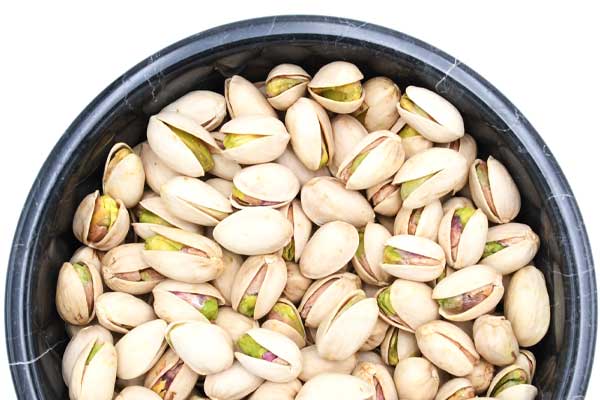
Note that today’s US pistachio are of excellent quality since Iranian pistachios, in general, have distinct and special qualities, such as huge seeds and smiling pistachio. Because of this, as well as the great quality of pistachios produced in the United States, the narrative of pistachios has become a popular one in the United States, and many people all over the world are interested in learning how to prepare and consume American pistachios.
Historical search for best cultivars for producing US pistachio
In the American South and California, the botanically minded experimented with growing valuable trees. The Chico New Plant Introduction Station, established in the early twentieth century, was the genuine beginning of pistachio dominance. Ferguson notes that one of the USDA’s goals is to explore “new worlds” of plants, paraphrasing a favorite sci-fi quote. William E. Whitehouse, a deciduous tree researcher, was dispatched to Iran by the station in 1929. His goal was to gather pistachio seeds to plant.
However, development was slow, and for decades, pistachio cultivation remained small-scale. Whitehouse kept an eye on the pistachio as a possible cash crop for California, and in 1957 he published a report on the subject. While the Iranian pistachio has been a valuable local crop for hundreds of years, its value as export was only realized in the early part of the twentieth century. Despite the high demand, the first commercial crop of American pistachios was harvested in 1976, after a two-decade wait.
However, rather than being botanical, the underlying cause for the American pistachio’s success was political. When citrus and almond plantations became increasingly taxed in the early 1970s, California producers moved to pistachio plantings, which was aided by the Central Valley Project delivering essential water. After a decade of tensions with Iran, sanctions on Iranian pistachios were imposed.
The first test plots were established within a year. However, because pistachio trees take seven to 10 years to grow, Whitehouse didn’t know what he’d found for almost a decade.
Only one of Whitehouse’s nuts turned out to be beneficial. He had collected the nut from a mound of drying nuts in the Agah family’s orchards in Kerman province, Iran’s central plateau, where they were notable pistachio growers. After the famed carpet-making city in Kerman province, Whitehouse called the pistachio tree “Kerman.” By budding the Kerman to hardier rootstock kinds, scientists were able to reproduce and strengthen it.
The vision of a US pistachio industry was becoming a reality after many years of experimentation. In the 1960s, word of the new crop spread throughout California, They were also, planted in New Mexico and Arizona. Many aspects of the new crop, however, posed a challenge to these daring Americans.
In 1982, little than a decade after the commercialization of pistachios Whitehouse died. Despite being known as the “Father of the US Pistachio Industry,” he has never gotten famous for his achievements. In 1977, he was honored with the first Pistachio Association’s Annual Achievement to Industry Award, and a pear (of all things) was named after him. Only 1,700 acres of productive trees were planted that year. In light of his accomplishments, it looks like pistachios: building the framework for a $1.6 billion business in California alone, and finding a new home for an in-demand product.
How much US pistachio was produced?
The pistachio industry in the United States has had a remarkable run. From its first commercial crop of 1.5 million pounds (680 tons) in 1976 to the record production of nearly 900 million pounds (408,233 metric tons) in 2016, the production has grown from strength to strength. This increase in the total crop has been reflected in an increase in production per acre, which has increased from 1,468 pounds per acre in 1982 to nearly 3,806 pounds per acre in 2010.
US pistachio industry nowadays
Today, California, Arizona, and New Mexico produce all of the commercial pistachios in the United States. With almost 312,000 acres planted across 22 counties, California accounts for 99 percent of the total. There are 950 pistachio growers in the United States, with the annual “farm gate value”* of pistachios worth more than $1.6 billion in California and more than $16 million in Arizona and New Mexico.
*In agriculture, the net worth of a product after marketing expenditures are deducted is sometimes referred to as the net value of the product when it leaves the farm.
Production of in-shell pistachios in the US from 2012 to 2022
Conclusion
The quality of Iranian pistachio seedlings determines the quality of pistachios produced in the United States today. The features of Iranian pistachios are so well-known and magnificent that they have allowed the pistachio plant to flourish and generate high-quality products like US pistachio. In any case, we hope that this essay has piqued your interest and provided answers to all of your questions on the relationship between Iranian and US pistachio.


Leave A Comment